


The Trust Crisis: When Seeing Is No Longer Believing in the Age of Deepfakes
Deepfakes are reshaping how courts, media, and society evaluate truth. Explore how synthetic media is eroding trust in digital evidence and what it means for the future of verification.
On this page
Not long ago, a video could end an argument.
If something was caught on camera, that was it. Case closed. Whether it showed up in court, on the news, or buried in a group chat, the assumption was the same: this happened.
That assumption is getting harder to hold onto.
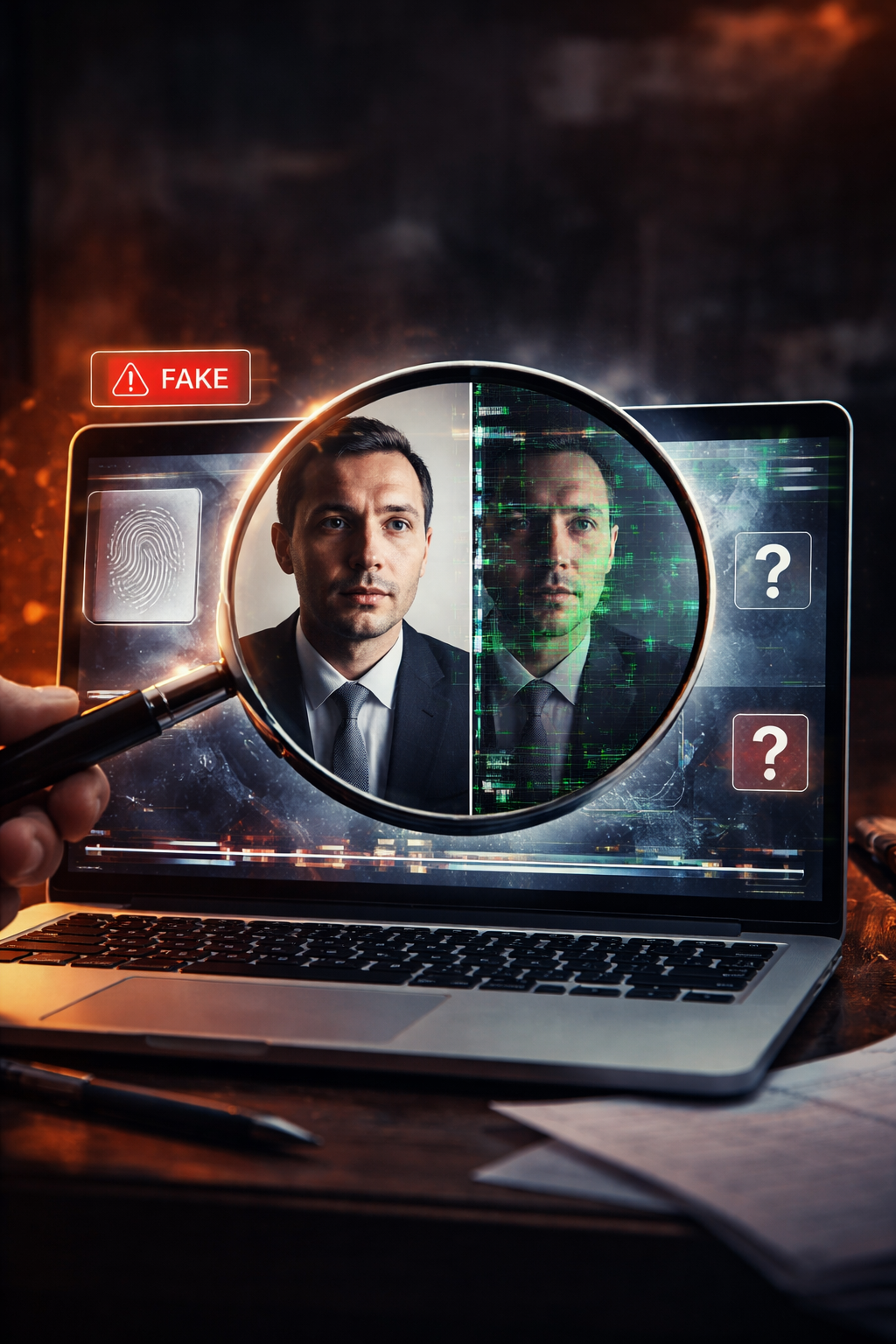
Now, when a clip surfaces, especially one that matters, there’s a pause. Not always out loud, but it’s there:
Is this real?
That hesitation might seem small. It isn’t. It changes how evidence works.
Evidence Used to Anchor Reality. Now It Competes With It
Digital evidence didn’t just support decisions, it anchored them.
Surveillance footage, phone recordings, leaked videos. They gave people something solid to point to. Something shared.
What’s changed isn’t that fake content suddenly appeared. Manipulation has existed for years. What’s different now is how convincing it has become, and how widely people understand that.
You don’t need everyone to believe something is fake. You just need enough people to think it could be.
That’s where things start to slip.
Courts have historically leaned on technical signals to establish authenticity, metadata, timestamps, and file origins. Cases like United States v. Lizarraga-Tirado show how even something as simple as location data could be treated as reliable context.
But those signals are no longer as stable as they once were. They can be altered, replicated, or detached from the source entirely.
So now the question isn’t just what does this show?
How much weight should we give it?
The “Maybe It’s Fake” Defense Is Already Here
There’s a phrase legal commentators use, the liar’s dividend.
It sounds technical, but the idea is simple:
If fake media exists, real media becomes easier to deny.
You don’t need to prove a video is fabricated. You just need to raise enough doubt to make it uncomfortable to rely on.
We’re starting to see this play out in real cases. Defense strategies increasingly question the integrity of digital evidence, not always by disproving it, but by reframing it as potentially unreliable. Cases like State of Texas v. Robert Miller reflect that shift, where the conversation moves away from what happened toward whether the evidence can be trusted at all.
That’s a very different kind of argument.
And it’s effective, because it doesn’t require certainty, just hesitation.
The Law Still Assumes Evidence Can Be Verified
Most legal systems weren’t built for this level of ambiguity.
In the U.S., for example, the Federal Rules of Evidence, especially Rule 901, set a relatively straightforward expectation: if you want to use something as evidence, you need to show it’s authentic.
That used to be a manageable bar.
Now, proving authenticity isn’t always about showing something is real. It’s about showing it hasn’t been subtly altered somewhere along the chain.
And that chain is getting harder to track.
Files move. Formats change. Content is compressed, re-uploaded, clipped, edited, sometimes multiple times, before it even reaches a courtroom.
By the time it gets there, the burden isn’t just verification. It’s reconstruction.
Regulation Is Catching Up, But Not Fast Enough
There’s no shortage of legislative interest in this space.
In the U.S., proposals like the DEEPFAKES Accountability Act aim to introduce labeling requirements and penalties for deceptive use. In Europe, the EU Artificial Intelligence Act takes a broader approach, requiring transparency around AI-generated content in certain contexts.
These are meaningful steps.
But regulation tends to move carefully. Technology doesn’t.
And even when rules are clear, enforcement is messy. Content doesn’t stay in one jurisdiction. A video created in one place can spread globally before anyone has time to question it.
So while policy matters, it doesn’t fully solve the underlying issue: people are already less certain about what they’re looking at.
The Bigger Problem Isn’t Fake Content. It’s Ambient Doubt
There’s a tendency to frame this as a misinformation problem. That’s only part of it.
The deeper issue is what happens after people learn that highly realistic synthetic media exists.
They start to second-guess everything.
- A real video gets dismissed as edited
- A clear recording sparks debate instead of clarity
- People rely more on instinct or alignment than on the content itself
that point, evidence doesn’t settle arguments—it feeds them.
And once that shift happens, it’s hard to reverse.
Detection Tools Help, But They Don’t Fix Trust
Yes, detection is improving. There are teams building systems to identify manipulated media, and some are getting quite good.
But detection has limits.
It usually happens after the content is already public. It requires trust in whoever is doing the verifying. And even when something is flagged, that conclusion doesn’t always spread as far as the original clip.
There’s also a more practical issue: the pace.
Generation improves. Detection responds. Then the generation improves again.
It’s not a one-time fix. It’s an ongoing cycle.
Which is why more attention is shifting toward something less visible, but arguably more important: provenance.
Groups like the Coalition for Content Provenance and Authenticity are working on ways to attach verifiable history to media, where it came from, how it was created, and whether it’s been altered.
That doesn’t make fake content disappear. But it gives real content something it currently lacks: context that travels with it.
What Happens If People Stop Trusting Everything?
There’s a version of this future that doesn’t get talked about enough.
It’s not one where fake content dominates. It’s one where nothing feels reliable.
Where every video comes with an asterisk.
Where even verified evidence gets questioned.
Where people default to skepticism, not because they’re informed, but because they’re unsure.
That kind of environment doesn’t just affect courts or journalists. It affects everyday decisions.
What do you believe?
What do you share?
What do you ignore?
At some point, the issue stops being technical. It becomes cultural.
We’re Not Losing Evidence. We’re Losing Confidence in It
Digital evidence isn’t going away.
Video still matters. Audio still matters. Images still carry weight.
But they don’t carry it automatically anymore.
They need support, context, verification, and credibility behind the source. That’s the real shift.
Not from truth to falsehood, but from assumption to scrutiny.
Final Thought
The old model was simple:
If you can see it, you can trust it.
That model is gone.
What replaces it isn’t as clean. It’s slower. More layered. Sometimes frustrating.
But it’s also more honest.
Because in a world where synthetic media exists alongside real content, trust was never going to survive on visuals alone.
Now, it has to be built, piece by piece, around them.



