


The Psychology Behind Deepfakes: Why People Believe Synthetic Media
Learn why Deepfakes feel believable, how human psychology affects trust online, and why people often fall for synthetic media without realizing it.
On this page
Most people think they would notice a fake video immediately
That is usually the first reaction.
“If it was fake, I’d be able to tell.”
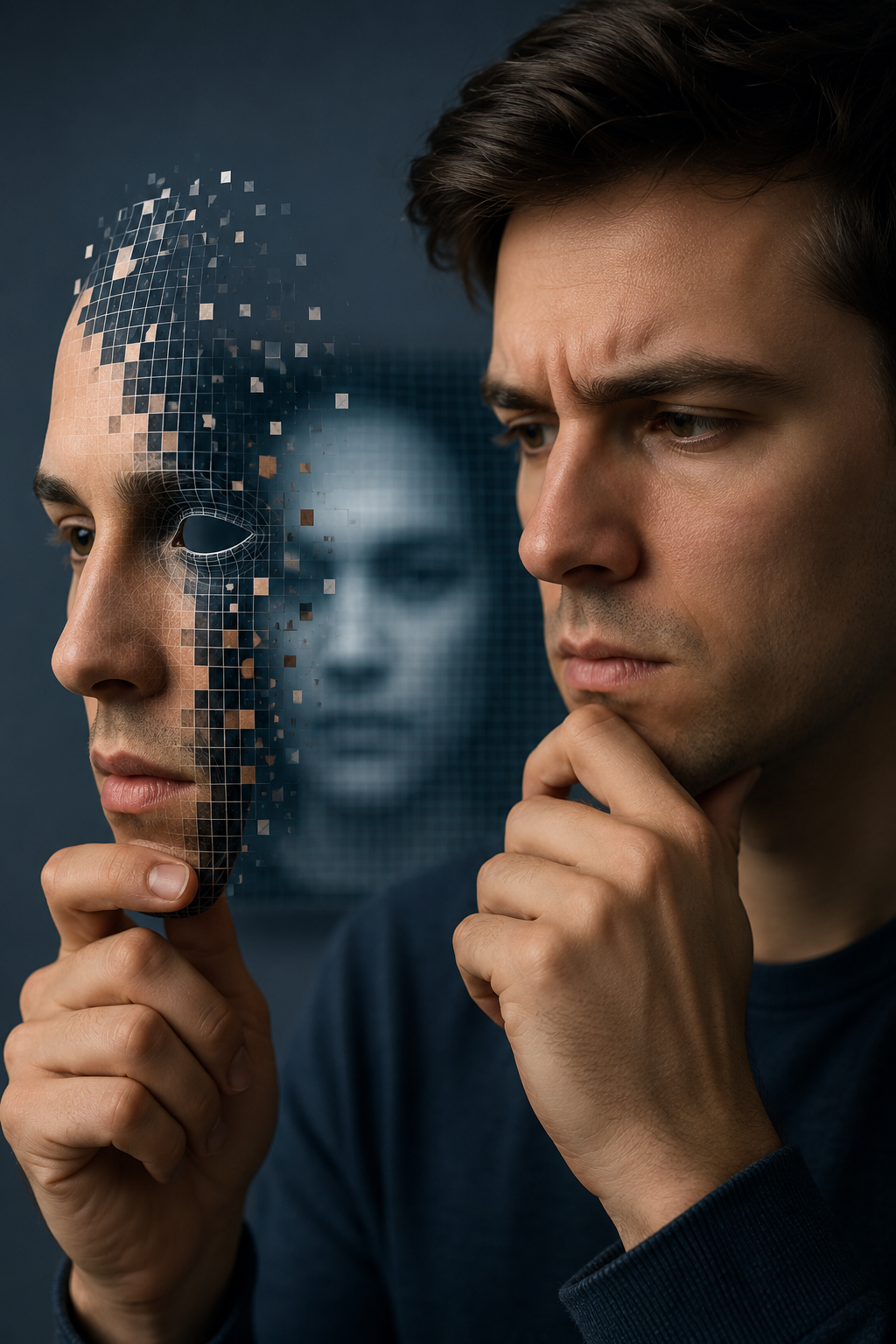
But Deepfakes do not work by being perfect.
They work by feeling believable enough.
A video does not need to fool experts to spread online. It only needs to look convincing for a few seconds. Long enough for someone to react, share it, or assume it is real.
That is what makes synthetic media so effective.
The technology matters, but psychology plays an even bigger role.
People Trust What Appears to Be Familiar
The human brain can quickly identify a person's face, voice, or expression.
This happens unconsciously for most of us daily.
Because we have become accustomed to believing what we visually see as long as that visual image represents an individual we are familiar with.
The human brain will automatically believe that anything seen by way of a video featuring a person recognized is authentic.
In addition to being able to rapidly create something which appears to be realistic.
Deepfakes can quickly appear believable due to many reasons, including but not limited to: because even though there may be minor inaccuracies regarding the appearance of the subject in the video.
Our familiarity with the subject in question will fill in those areas where the accuracy was lacking.
Emotion Often Beats Logic
Most viral Deepfake videos are designed to trigger emotion first.
Shock. Anger. Fear. Surprise.
When people react emotionally, they are less likely to stop and analyze what they are seeing. Instead, they respond immediately.
This is not unique to Deepfakes. It is part of how people use social media in general.
Fast reactions usually happen before careful thinking.
Research discussed by the Brookings Institution has shown that emotionally charged misinformation spreads faster because people are more likely to engage with it before verifying it.
Deepfakes take advantage of that behavior.
The Brain Looks for Confirmation
There is another way that many people will accept synthetic media. That is through "confirmation" of what we currently believe. We tend to take in information as true when it fits into our beliefs.
If you do not trust a particular public figure, then you would be more likely to believe a fabricated video about them. This belief is supported by your current opinions.
This makes Deepfakes especially powerful online, where people often stay inside communities that share similar views.
The fake content does not need to be flawless.
It only needs to feel possible.
Most People Are Not Looking for Signs of Manipulation
People in daily routines don't analyze video at a shot-by-shot level.
They scroll through video content rapidly, they're doing multiple things, or their focus is divided.
The environments where this occurs make it much easier to create artificial media that goes unnoticed as to its artificiality by casual users.
A significant amount of time, even small amounts of distortion, can go undetected by regular viewers when viewed under normal viewing conditions.
According to research published on arXiv.com, most current deep fake video and image creation can convincingly deceive casual viewers while using standard devices (i.e., smartphones) or during rapid, low-quality viewing on standard platforms such as social media.
Many casual users have an expectation that they will not be deceived; therefore, the lack of skepticism creates additional credibility.
Repetition Makes Things Feel Real
There is also a psychological effect called the “illusory truth effect.”
The idea is simple. The more often people see something, the more believable it starts to feel.
Even if it is false.
This becomes a problem online because synthetic media spreads quickly across multiple platforms. Once people see the same clip reposted over and over, familiarity starts to replace skepticism.
At that point, people may stop asking whether it is real and start assuming it probably is.
Better Technology Makes the Problem Worse
Early Deepfakes were easier to spot.
Faces looked unnatural. Movements were stiff. Lip syncing often failed.
Now the quality is improving fast.
Open-source AI models and advanced generative systems have made synthetic media more realistic and easier to create.
Companies like Google and OpenAI have helped push AI generation forward, while researchers continue improving image and video realism.
As the technology improves, people have fewer visual clues to rely on.
That means psychology becomes even more important.
Why Detection Alone Is Not Enough
While many believe that advanced detection techniques alone can help fix this issue, detection has its limitations.
The initial emotional response to fake content typically occurs before it is detected as such. This is why even after a video has been proven false, millions of users may have already viewed and shared the video.
Therefore, experts are beginning to focus on developing media literacy and increasing content transparency rather than simply improving detection systems.
Helping users take their time, think about what they see or hear, and understand the underlying process of creating synthetic media could be equally important as the technological aspect of detecting synthetic media.
Conclusion
Deepfakes are not believable, not only because the technology is improving.
They are believable because they work with normal human behavior.
People trust familiar faces. People react emotionally. People believe information that matches what they already think.
Synthetic media takes advantage of all of these patterns.
Therefore, the challenge that we face is much larger than just technology alone. The long-term future of synthetic media will rely upon the realism of the systems, as well as how many people can recognize the underlying psychological reasons for such.



