


Global Snapshot: How the US, EU, UK, and Canada Treat Deepfakes vs. Ethical AI Erotica
A global overview of how the US, EU, UK, and Canada regulate Deepfakes versus fiction-only ethical AI erotica, plus how couples use AI companions for safe long-distance intimacy.
On this page
Long-distance love has always required a little creativity.
You learn to treat voice notes like keepsakes. You schedule calls the way other couples schedule dates. You fall asleep to the idea of someone, not the physical presence of them.
Now, AI companions are entering that space. For some couples, fictional AI characters are becoming a private tool for staying emotionally connected when time zones and distance make intimacy feel like logistics.
That can be beautiful. It can also be risky.
Because the same tech that powers fictional roleplay can also power Deepfakes, impersonation, and identity theft. The difference is not subtle. It is consent. It is whether a system creates something new or borrows someone’s real identity without permission.
And that difference is exactly what regulators are starting to take seriously across the US, EU, UK, and Canada.
Two worlds that keep getting confused
When people hear “AI erotica,” they often picture Deepfakes. That is the category mistake that keeps breaking public conversations and producing sloppy policy.
Deepfakes rely on real people. Real faces. Real voices. Real identities.
Ethical AI erotica, done responsibly, relies on fiction. No real person likeness. No real voice. No “face swap.” No celebrity prompts. No private individual dragged into someone else’s fantasy.
If lawmakers want to reduce harm without banning harmless expression, the line has to be drawn at impersonation.

The US: fast takedowns and legal pathways for victims
The US approach is increasingly about giving victims practical tools to fight back.
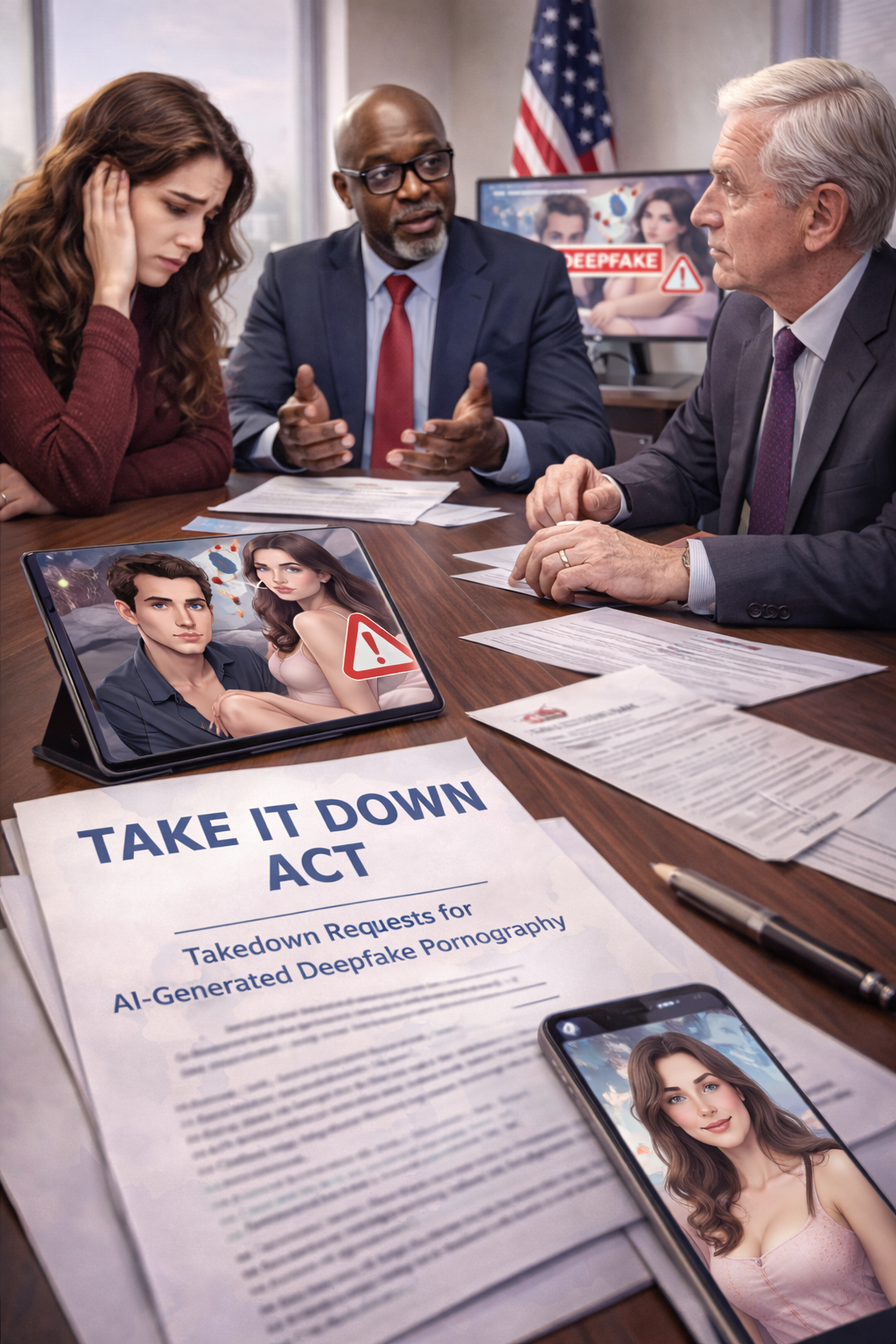
TheTAKE IT DOWN Act is one of the clearest examples. It focuses on non-consensual intimate imagery, including certain AI-generated forgeries, and pushes platforms toward notice-and-removal systems. Legal analysis notes that covered platforms have a compliance deadline of May 19, 2026, to implement required processes, including appeals. Orrick’s overview and Morgan Lewis guidance both highlight this timeline and operational impact.
The US also treats Deepfakes as a fraud and deception problem. That is why agencies like the FTC have publicly warned about impersonation threats tied to AI-generated media, including voice cloning. The FTC consumer alert on harmful voice cloning spells out exactly why these impersonations work. People trust familiar voices.
What does this mean for ethical AI erotica?
If a platform is fiction-only and blocks real-person impersonation, it is generally not the statutory target. But it is still expected to behave like a serious service. Strong reporting. Fast response. Clear bans. Clean enforcement.
The EU: transparency rules, labeling, and a “prove it is synthetic” future
The EU is building a framework where synthetic content has to be easier to recognize.
The EU AI Act’s transparency obligations are widely summarized under Article 50, including obligations related to deepfakes and disclosure. The European Commission has also been actively preparing the ecosystem with a draft code and guidance aimed at marking and labeling AI-generated content. The Commission’s announcement states that transparency rules become applicable on August 2, 2026, and describes the drafting timeline. European Commission announcement and Code of Practice page are the cleanest references.
This is a different posture than a ban-first approach. It is closer to this: if content can be mistaken for real, it should be disclosed and traceable.
That matters for adult platforms because it means the safest posture is clear boundaries and a transparent design. Fiction-only is not just a brand preference. It is a compliance-friendly structure.
The UK: stronger criminalization plus platform duties with real teeth
The UK is moving aggressively on non-consensual sexual imagery, including deepfakes.
The government has announced plans to make creating sexually explicit deepfake images a criminal offence. The UK government announcement lays out the direction and framing.
At the same time, the UK’s Online Safety Act has shifted expectations for platforms, especially around illegal content and protections for children. Ofcom’s posture shows this is not theoretical. Ofcom has opened investigations tied to sexualized AI imagery and has been transparent about enforcement actions and fines. Ofcom’s investigation update is a useful example of how the regulator talks about duties and enforcement.
For ethical AI erotica, this is the takeaway. The UK is not telling all AI content to disappear. It is telling platforms to prevent identity harm and manage risk proactively.
Canada: online harms governance and pressure to close deepfake gaps
Canada’s trajectory combines platform accountability and criminal law modernization.
The Department of Justice has published explanatory material on Bill C-63, which proposed an Online Harms Act and related amendments. Canadian Heritage has also summarized the policy goals and the idea of baseline standards for platforms. Canadian Heritage overview is a straightforward reference.
Canada’s public debate has increasingly acknowledged that older “intimate image” frameworks were not designed for synthetic impersonation. The point is not that Canada is anti-AI. The point is that identity misuse is becoming harder to ignore.
Fiction-only adult platforms again sit on the safer side of this line, as long as they enforce it consistently.
Now the relationship angle: why couples turn to fictional AI companions
Policy is one side of the story. The other side is human.
Long-distance couples use tools to keep intimacy alive. Some write shared stories. Some roleplay. Some create private rituals that feel like touch at a distance.
Fictional AI companions are entering that tradition because they offer three things that distance makes scarce.
Privacy
Intimacy is data.
People share details with companion systems that they would never post publicly. That is why privacy failures hit harder in this category than almost anywhere else.
It is not just a theory. Italy’s data protection authority fined the developer of Replika over privacy violations and concerns, including age verification failures. Reuters reporting on the Replika fine and the European Data Protection Board’s summary of the Italian decision, EDPB note on the Replika case are strong references.
Personalization
Couples are not looking for generic erotica. They want something that sounds like them, fits their boundaries, and matches the emotional tone of the relationship.
That is why customization matters. It can feel like a shared language. A private script only two people understand.
Research on romantic and companion chatbots discusses both the appeal and the risks of these systems, including concerns about data protection. A 2025 review on romantic AI provides a credible overview.
Safe fantasy exploration without identity theft
For couples, fantasy is often about freedom. Exploring something together without bringing a real third party into it.
Fiction-only design matters here. It keeps exploration inside imagination rather than turning it into impersonation.
Privacy research also matters here because people often disclose more to chatbots than they expect, and some companion apps show contradictions between what they say and what their policies allow. The study Privacy Discrepancies in Romantic AI Chatbot Apps is a useful citation if you want a hard, research-backed warning that still fits a calm tone.
What “responsible” looks like in 2026
If you want to write this topic honestly, you cannot just celebrate the upside. You have to tell people what safety looks like.
For platforms
- Ban real-person prompts and identity references
- Block uploads designed to recreate real individuals
- Make reporting and takedowns fast and clear
- Offer deletion and privacy controls that match the intimacy of the product
- Use safety-by-design logic instead of waiting for scandals
For couples
- Treat the AI as a tool for connection, not a replacement for the relationship
- Keep it fictional. Do not recreate real people’s identities
- Avoid sharing sensitive identifiers you would regret losing
- Choose services with clear privacy controls, deletion options, and adult-only guardrails
Conclusion
The global trend is getting clearer.
The US is building takedown systems and victim remedies. The EU is building disclosure and labeling expectations. The UK is tightening criminal liability and platform duties. Canada is working toward baseline standards for platform accountability and closing legal gaps.
They are not all saying the same words, but they are responding to the same truth.
Deepfakes are an identity crime. Ethical AI erotica, when it is fiction-only, is not.
For long-distance couples, that distinction is not political. It is personal. It is what keeps intimacy private, consent-based, and safe.
The future is not about banning imagination. It is about refusing to steal real people to fuel it.



