From Panic to Policy: Getting Serious About Deepfakes Without Breaking Ethical AI Erotica
Getting Serious About Deepfakes Without Breaking Ethical AI Erotica
On this page
Every new technology goes through the same emotional arc. First comes curiosity. Then excitement. Then misuse. And finally, panic.
AI has reached that last stage. Deepfakes dominate headlines, lawmakers scramble, and the public conversation collapses into fear. In that rush, everything starts to blur together. Ethical creation gets lumped in with abuse. Fiction gets confused with impersonation. The result is a policy that feels reactive instead of effective.
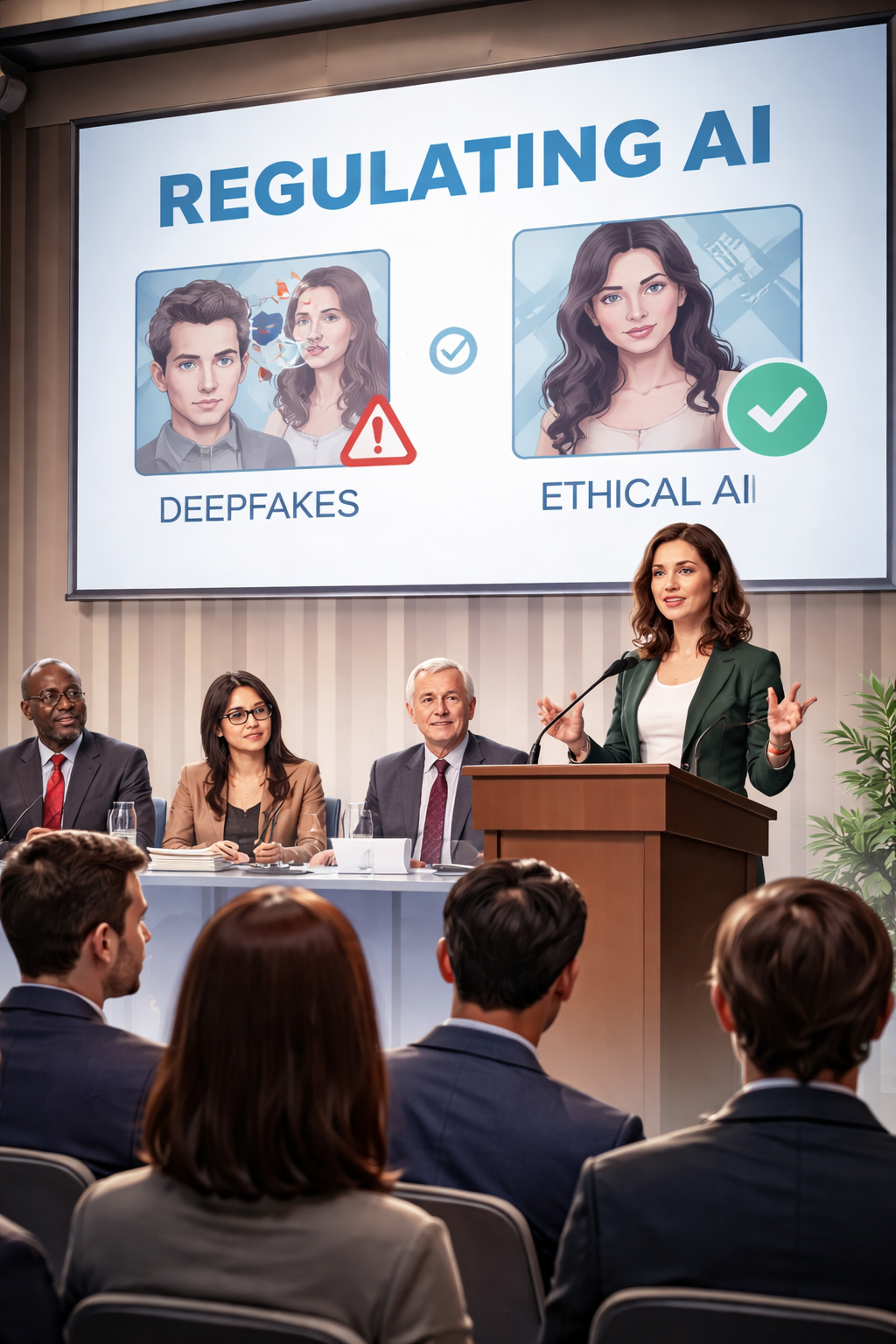
The harm caused by Deepfakes is real. No one serious denies that. If regulation is going to work, it has to be precise. It has to focus on consent, identity, and intent, not just the existence of AI-generated content.
Why Deepfakes Trigger So Much Panic
Deepfakes provoke such a strong reaction because they violate something fundamental. Identity. They take real faces, real voices, and real people, and place them into situations they never agreed to.
That concern isn’t hypothetical. Multiple investigations have shown that the vast majority of Deepfakes online have been non-consensual and pornographic, disproportionately targeting women, a pattern documented in reporting on deepfake pornography and its real-world consequences.
This history explains why public anger is justified and why lawmakers feel pressure to act quickly.
Speed, however, is not the same as accuracy.
The Real Problem Isn’t AI. It’s Impersonation.
At the center of the Deepfake issue is impersonation. Deepfakes work by borrowing someone else’s identity and stripping away consent. That is the harm, not the algorithm itself.
Legal and policy analysis around unauthorized AI voice and likeness replication consistently points to identity misuse as the core problem. The same conclusion appears in broader discussions of AI-generated impersonation risks by consumer protection authorities.
Ethical AI erotica does not rely on impersonation. It does not need real faces, real bodies, or real voices. It creates fictional characters from scratch.
That distinction is not subtle. It is foundational.
How Overbroad Regulation Misses the Target
When fear drives regulation, lawmakers tend to write sweeping rules. Anything AI-generated becomes suspect. Adult content becomes an easy target.
The problem is that blanket bans do not eliminate Deepfakes. They push them underground.
Research into online abuse ecosystems shows that overly broad platform crackdowns often cause harmful communities to migrate to less visible spaces, reducing reporting and oversight. This dynamic is examined in studies of how online abuse networks adapt to enforcement.
Ethical platforms, the ones already banning impersonation and investing in moderation, end up punished for doing things right.
That is not harm reduction. It is misdirection.
What Serious Deepfake Policy Should Actually Focus On
If lawmakers want to reduce harm, policy needs to narrow its scope, not widen it.
Effective Deepfake regulation targets:
- Non-consensual use of real identities
- Unauthorized replication of faces or voices
- Intent to deceive, defraud, or exploit
- Distribution and monetization of impersonation content
This approach aligns with emerging legislative efforts like the No Fakes Act, which focuses specifically on unauthorized AI replicas of real people rather than fictional generation.
It also mirrors guidance from the U.S. Federal Trade Commission, which emphasizes deception and impersonation rather than the mere presence of AI-generated media.
Ethical AI Erotica Is Not the Enemy
Ethical AI erotica exists precisely because of the Deepfake problem, not in denial of it.
By enforcing fiction-only creation, banning real-person references, and educating users on safe prompting, ethical platforms remove the conditions that make identity theft possible. This logic mirrors long-standing principles in media and publicity rights law, where harm arises only when real identities are exploited.
Conflating ethical AI erotica with Deepfakes does not protect anyone. It muddies accountability.
Platforms Matter More Than Panic
Policy alone cannot solve this. Platforms play a critical role.
Responsible AI platforms already implement safeguards regulators routinely call for:
- Prompt filtering to block real-person references
- Restrictions on voice or likeness uploads
- Clear reporting and appeals systems
- Human moderation backed by internal guidelines
Regulators increasingly refer to this approach as safety by design. It means building systems that prevent harm before it occurs instead of relying solely on takedowns.
Ethical platforms are not loopholes. They are proof that thoughtful governance works.
The Human Cost of Getting This Wrong
There is another consequence to careless regulation that rarely gets discussed.
For many users, including trauma survivors and people with social anxiety, ethical AI erotica provides a controlled, judgment-free space. Research into digital companions and mental health shows that fictional, controlled environments can support emotional regulation and self-exploration when designed responsibly.
When policymakers collapse everything into “Deepfake porn,” they erase those experiences. Survivors lose tools that helped them feel safe. Communities lose spaces that were never causing harm.
Protecting people means understanding how technology is actually used.
Moving From Fear to Precision
The conversation around Deepfakes needs to grow up.
We can acknowledge harm without flattening nuance. We can regulate impersonation without banning imagination. We can protect consent without criminalizing ethical creation.
Good policy does not come from panic. It comes from precision.
If lawmakers want real results, they need to stop treating all AI-generated adult content as the same thing. The difference between Deepfakes and ethical AI erotica is not philosophical.
One steals identity.
The other avoids it entirely.
A Future That Doesn’t Break What Works
The future of AI regulation will be judged not by how fast it moved, but by how well it worked.
If policy targets real harm, non-consensual impersonation, fraud, and abuse, ethical AI platforms can continue to innovate responsibly. If it does not, we risk dismantling the safest parts of the ecosystem while leaving the most dangerous ones untouched.
We do not need less AI.
We need better boundaries.
We do not need panic.
We need policy that understands the difference.