


Deepfake vs Synthetic Media: What's the Difference?
What is the difference between a deepfake and synthetic media? Learn how AI-generated content works, why deepfakes are controversial, and why the distinction matters.
On this page
Just a couple of years ago, very few people knew what the term "deepfake" meant, but today it's used daily in news stories and on social media.
Every week or two, another story pops up. A well-known actor appears online saying something outrageous.
A political figure appears in a video making a questionable statement. Or someone receives an incoming phone call from someone who looks/acts/sounds just like their deceased mother, asking them to send her money.
After doing some research into why this occurred (it didn't), the explanation always ends with; it was done by Artificial Intelligence.
While many people see how frightening AI-generated content can be, there is a significant piece of information about AI-generated media that is almost always overlooked.
While AI-generated media has a huge range of applications, not every example of AI-generated media is considered a deepfake. In fact, a deepfake represents only a tiny portion of synthetic media.
The distinction between "deepfake" and "synthetic media" is important, since they are frequently referred to as synonymous. They aren't. By confusing the two, we may also confuse our perception of the possibilities and/or limitations of AI-generated content.
What Is Synthetic Media?
The easiest way to think about synthetic media is to imagine content that wouldn't exist without artificial intelligence.
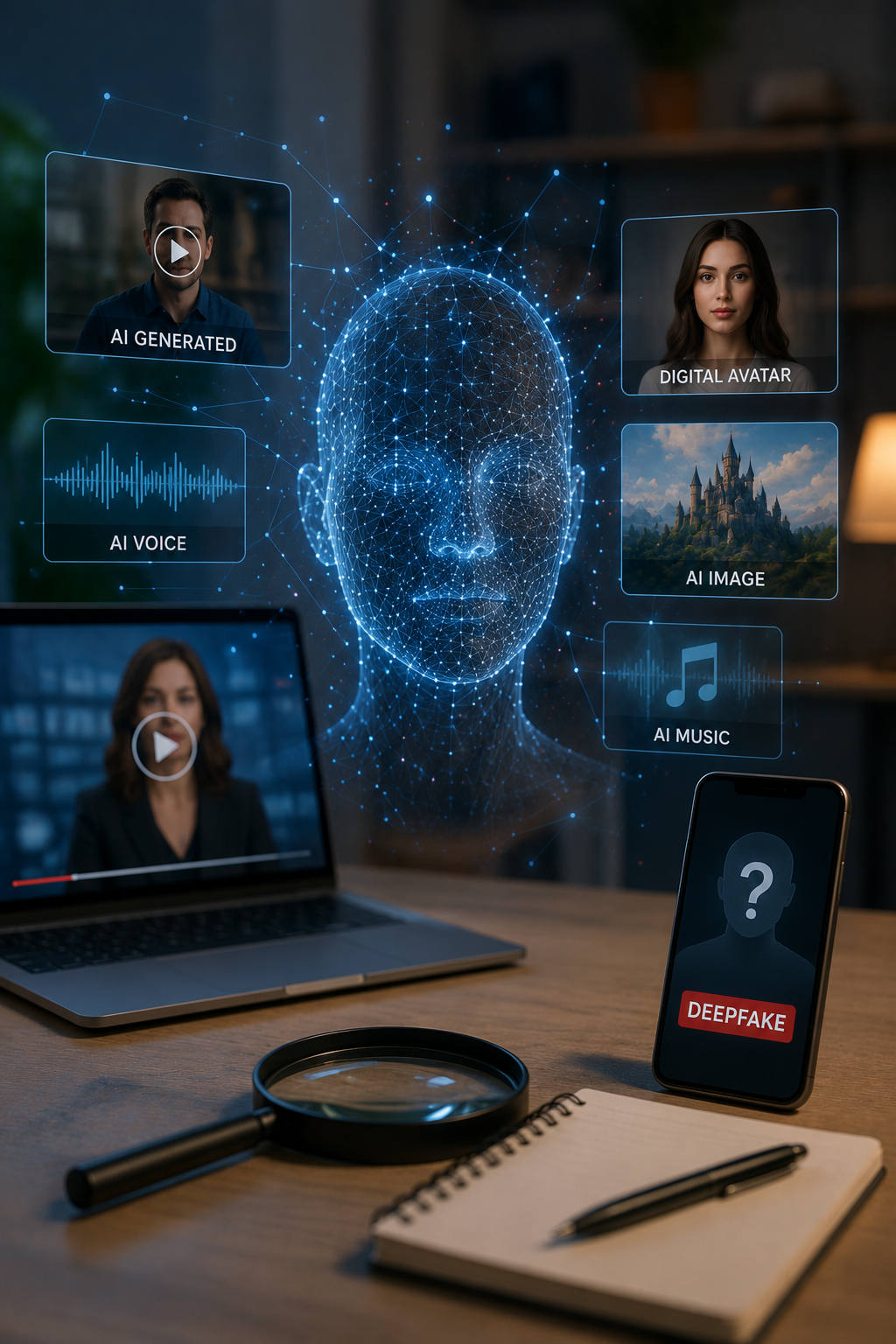
An AI-generated image of a fantasy kingdom. A virtual news presenter. A digital character in a video game. An AI-generated voice reading an audiobook.
All of these are examples of synthetic media.
The term covers:
- AI-generated images
- AI-generated videos
- AI-generated voices
- Virtual influencers
- Digital avatars
- AI-generated music
It's very important to understand that synthetic media does NOT necessarily represent deception; oftentimes, there is no intention to deceive or mislead others.
When an artist creates an original concept/character, he/she is not suggesting that the character exists in reality.
When a corporation uses an Avatar as an employee trainer, they are clearly stating that it is simply a digital representation of a real person.
While the content may be artificial, the intent behind its creation and use is clear to most audiences. This begins the point at which synthetic media diverges from Deepfakes.
What Is a Deepfake?
A deepfake is a specific type of synthetic media that imitates a real person.
Instead of creating something original, the technology copies someone's appearance, voice, or mannerisms and places them into content they never participated in.
Imagine seeing a video of a famous actor promoting a product they've never used. Or hearing what sounds like a CEO giving instructions to transfer company funds. Or watching a public figure appear to make a statement they never actually made.
Those are the kinds of situations that made deepfakes a global concern.
The technology itself is impressive. The problem is that it can make fiction look real.
And when people can't easily tell the difference, trust starts to break down.
Why the Difference Matters
This distinction isn't just about definitions.
It's about intent.
Most synthetic media is designed to create something new. Deepfakes are often designed to recreate someone who already exists.
That single difference changes the entire conversation.
When an artist generates an original character, there is usually no victim. When someone's face or voice is copied without permission, the situation becomes much more complicated.
Questions about consent, privacy, and authenticity suddenly enter the picture.
That's why discussions about deepfakes often focus less on technology and more on people.
The Real Issue Isn't AI
Many of us are guilty of pointing our fingers at Artificial Intelligence (AI) when we should be looking much further down the line.
At its core, AI is nothing but an instrument, one which can produce a false celebrity video as easily as it can enhance a badly degraded historical clip; allow those who've lost their ability to speak to once again express themselves; provide many new possibilities for filmmakers, teachers, designers, etc. that did not exist even a few years ago.
Technologically speaking, the same way that a camera can be either used to create art or spread lies, this same dynamic exists with AI.
Ultimately, what is most important is how we use the tools of technological advancement, and whether we are getting consent from all parties involved.
Why Deepfakes Feel Different
Deepfakes are so disturbing to people today largely because they create skepticism about an area of our lives we've been able to rely on (for some time) – our confidence that we can believe what we see and hear.
Video has long been viewed as a source of truth. When you could clearly recognize someone's voice or identify them by sight, you had evidence of their existence.
That assumption is no longer as easily made today. "Seeing" may never again be "believing."
All of us need to be mindful of how much information we consume. We now have to think twice before accepting a video at face value based on how believable it appears.
In addition to asking if the video is authentic, credible, and trustworthy, we also need to find out where it originated, who produced it, and if other credible sources verify the claims presented within.
Looking Ahead
AI-generated synthetic video content will be a part of our future.
More AI-generated video content will include more AI-generated speakers, more virtual characters, more personalization, and more AI creative tools.
While we are developing these new technologies that use AI, we will also have to develop ways to address the problems associated with deep fakes.
The choice is no longer whether or not to allow AI into your life. The decision has been made.
Final Thoughts
Although deepfakes and synthetic media relate to each other, they are different and cannot be used interchangeably.
Synthetic media is the larger term that can include virtually anything created by an Artificial Intelligence (AI), including, but not limited to, AI-generated artworks, virtual characters, digital voice capabilities, or even educational material.
Deepfakes are simply one subcategory within the larger classification of synthetic media and represent artificially created video footage that mimics real individuals.
When you understand the difference between these two terms, it allows for a more well-informed discussion regarding Artificial Intelligence (AI).
Understanding this also acknowledges that the technology itself does not tell the entire story. The most critical issue is what we choose to do with the technology. As AI continues to evolve into our daily lives, this will continue to become a more relevant concern.



