


Beyond Images: How AI Voice Cloning Expands the Deepfake Crisis
AI voice cloning is expanding the Deepfake crisis beyond images. Learn how synthetic voices enable impersonation, fraud, and identity misuse, and why consent matters.

On this page
What if hearing someone’s voice no longer meant they were really there?
For years, Deepfakes were mostly visual. Faces swapped into videos. Bodies placed into scenes they never consented to. The harm was obvious and deeply personal. However, the technology is now moving into something even more intimate: sound.
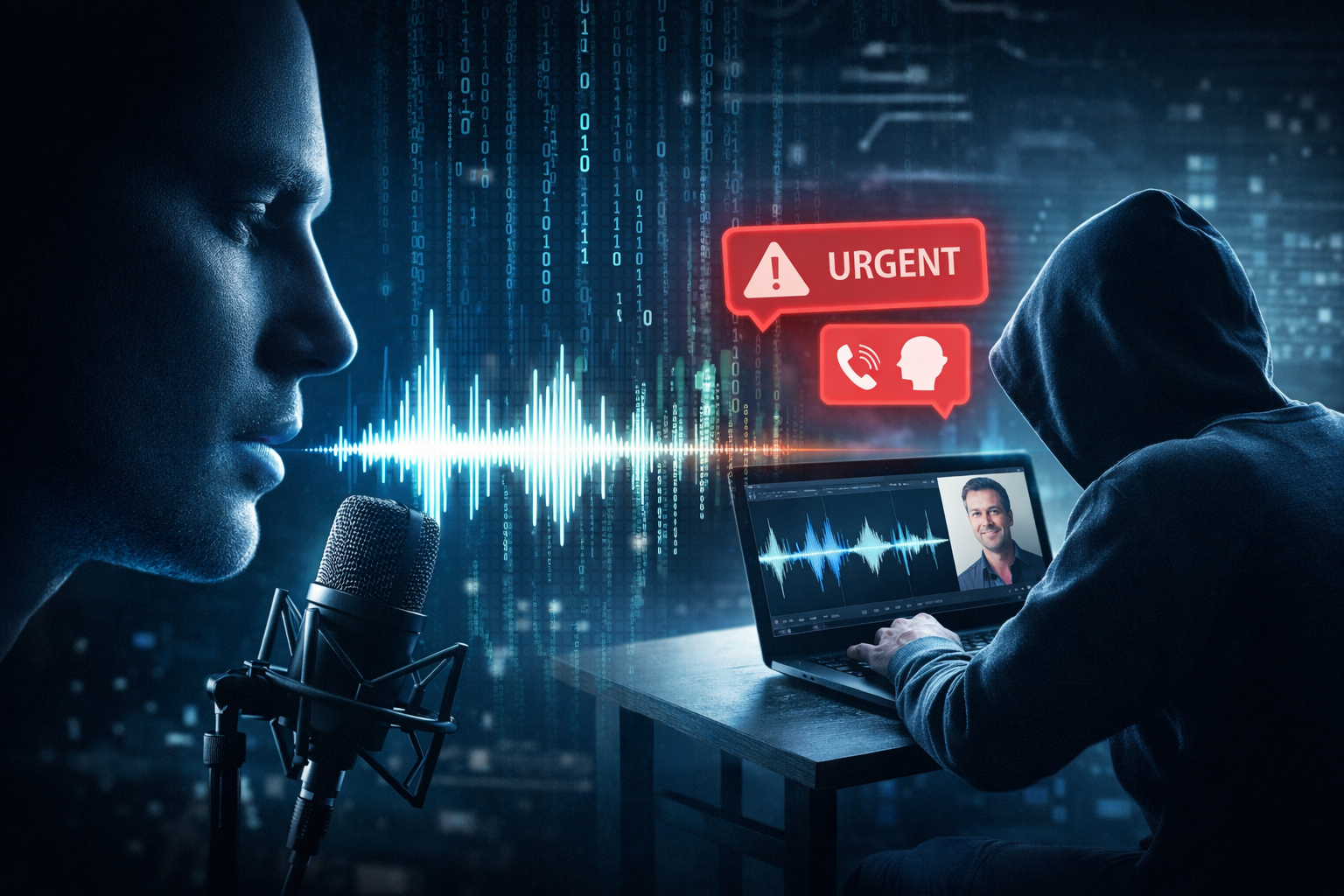
AI voice cloning can recreate a person’s speech from only a few seconds of audio. Tone. Cadence. Emotion. The result doesn’t just look real. It feels real. And when that voice is used without consent, the damage goes far beyond pixels on a screen. Researchers studying AI voice cloning systems have shown that some models can replicate voices using under a minute of source audio, dramatically lowering the barrier to misuse.
This is where the Deepfake crisis expands, and where the lines between ethical creation and identity theft need to be drawn clearly.
When Sound Becomes Identity Theft
A voice isn’t just noise. It’s how people recognize us, trust us, and connect with us. Hearing someone speak carries weight in a way images often don’t. We associate voices with intent, agency, and presence.
That’s why voice cloning represents a serious escalation.
Academic reviews of AI voice cloning technology describe how rapid advances in neural speech models have made high-quality voice replication accessible outside of professional studios. What once required specialized equipment can now be done with consumer-level tools.
There are legitimate uses for this technology. Accessibility tools allow people who have lost the ability to speak to communicate using synthesized voices. Media localization and post-production workflows also rely on consent-based voice synthesis, as outlined in industry explanations of voice cloning applications.
But when a real person’s voice is copied without permission, the technology stops being assistive and starts becoming exploitative.
Just like visual Deepfakes, voice cloning crosses the line when it borrows identity instead of creating something new.
Why Voice Deepfakes Feel More Invasive
Seeing a fake image can be shocking. Hearing a fake voice is unsettling.
Audio creates the illusion of participation. When a cloned voice speaks, it sounds like someone chose to say those words. That false sense of agency is what makes voice Deepfakes so dangerous.
This isn’t theoretical. Consumer protection agencies have warned that AI-generated voices are already being used in impersonation scams. The U.S. Federal Trade Commission has cautioned that voice cloning increases the effectiveness of scams because people instinctively trust familiar voices, especially in emotionally charged situations.
Law enforcement agencies have echoed these concerns. Reports from the FBI’s Internet Crime Complaint Center document a rise in fraud cases involving AI-assisted impersonation, where criminals pose as family members or authority figures over the phone.
Unlike images, audio doesn’t need to go viral to cause harm. A single phone call or voicemail can be enough.
This is not just misinformation. It’s manipulation.
Consent Isn’t Optional Just Because It’s Synthetic
One of the most persistent myths around AI-generated media is that “synthetic” means harmless. It doesn’t.
When real identities are involved, consent still matters.
Ethical AI content — including ethical AI-generated erotica — avoids this problem entirely by design. Fictional characters remove the risk of identity misuse altogether. No one’s voice, face, or reputation is taken without permission.
Voice Deepfakes work in the opposite direction. They rely on real people. Real voices. Real trust.
Digital ethics experts have emphasized that unauthorized voice cloning is uniquely violating because voices are tied to authenticity and intent, even when no image is involved.
Synthetic does not mean harmless when real identities are involved.
The Law Is Still Catching Up
Despite the growing risks, most Deepfake laws were written with images and video in mind. Audio impersonation often falls into legal gray areas between copyright, privacy, and publicity rights.
In the United States, courts have historically ruled that a human voice itself is not protected by copyright law, complicating enforcement against unauthorized cloning. Legal analysis from Skadden shows how victims often struggle to find clear remedies under existing statutes.
Some states have begun passing laws to protect voices and likenesses from unauthorized AI use, and national proposals such as the No Fakes Act aim to establish broader protections — though enforcement remains uneven.
Until legal frameworks mature, platforms carry much of the responsibility for preventing harm.
What Responsible Moderation Looks Like
As AI tools grow more powerful, moderation can’t be an afterthought. Especially on adult AI platforms, safety depends on infrastructure, not just rules on paper.
Good moderation starts with clear reporting tools. Users need an easy way to flag content that appears to misuse identity, including audio. Research into non-consensual synthetic media reporting failures shows that user-level controls alone are often insufficient.
Human review is essential. Automated filters can detect patterns, but they can’t interpret nuance. Trained moderators are needed to assess context, intent, and potential impersonation.
Fair appeals processes matter too. When moderation mistakes happen, users should be able to challenge decisions transparently.
Finally, proactive safeguards make the biggest difference. Policy researchers increasingly describe this approach as“safety by design” rather than reactive enforcement.
Ethical Creation vs Voice-Based Abuse
Ethical AI content creates something new. Voice Deepfakes take something that already belongs to someone else.
Fictional characters don’t lose autonomy. Real people do. This distinction is consistently emphasized in legal and policy discussions around synthetic media harms.
Clear boundaries don’t limit creativity. They protect it.
Why This Matters Now
Voice cloning tools are becoming easier to use and harder to detect. Security researchers have demonstrated that convincing voice replicas can be generated from short public clips, including social media videos and interviews.
Policy analysts warn that unchecked voice impersonation could undermine trust in everyday communication, from phone calls to public announcements, with long-term consequences for digital trust and personal autonomy, as outlined in European policy research.
Once trust collapses, it’s difficult to rebuild.
A Future That Respects Identity
The Deepfake crisis isn’t about AI itself. It’s about how we choose to use it.
Voice cloning shows what happens when technology advances faster than our boundaries. Ethical AI doesn’t need stolen voices any more than it needs stolen faces. It works best when it creates rather than impersonates.
Identity is not raw material. Consent is not optional. And intimacy, whether visual or audible, should never come at someone else’s expense.



